Commercial and industrial floor coatings aren't the same thing. Here's how to tell which one your Nassau County facility actually needs — and why it matters.
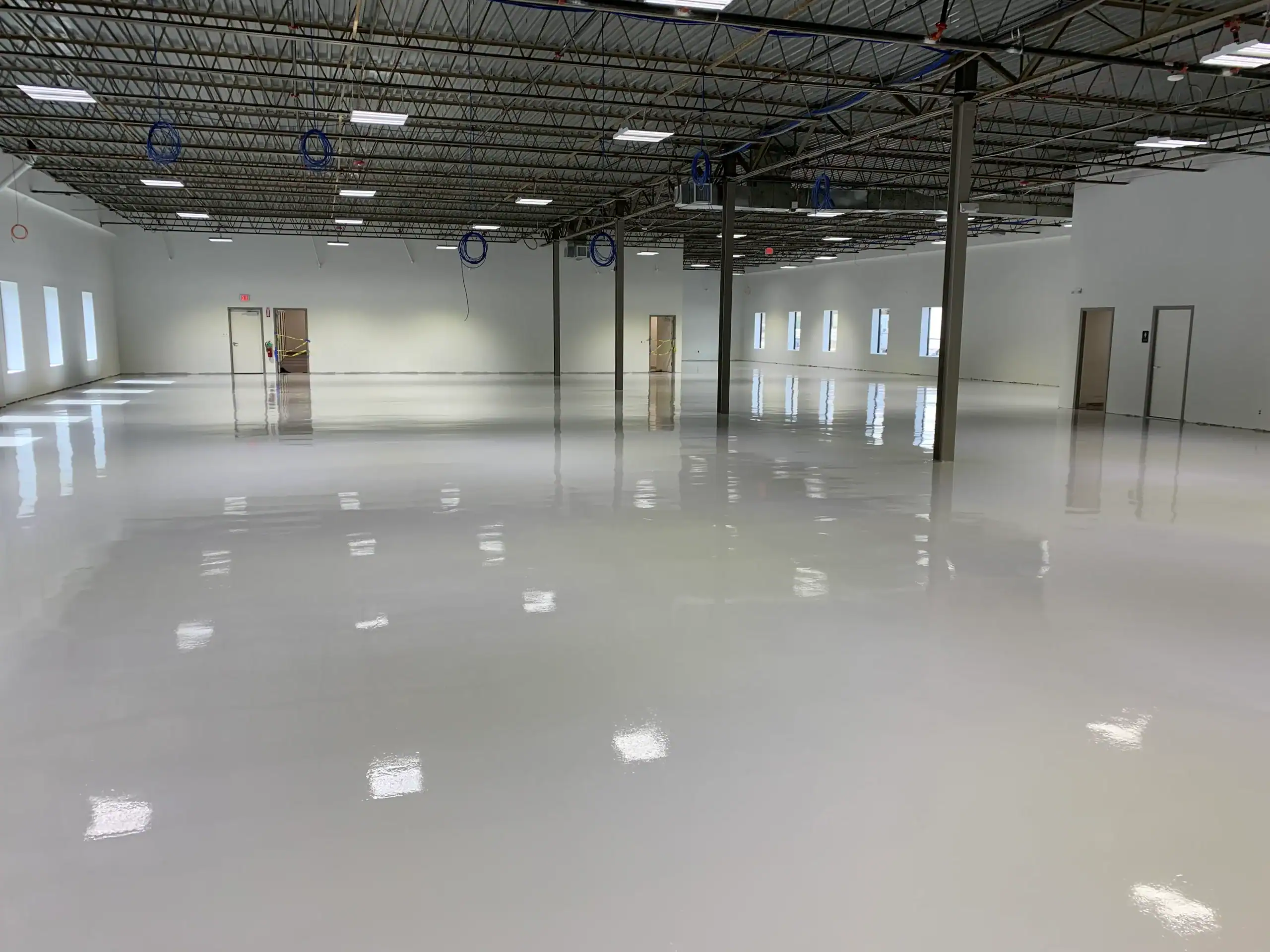
If you’ve been searching “commercial floor coatings” and getting a mix of results that all seem to say the same thing, you’re not alone. Most contractors use the terms commercial and industrial interchangeably — but they’re not the same, and installing the wrong system in the wrong environment is one of the most common reasons floors fail early.
Whether you’re managing a warehouse near the Meadowbrook Parkway, running a repair shop in Hicksville, or operating a medical office in East Meadow, what goes on your floor should match what your floor actually goes through. Here’s how to think about it clearly.
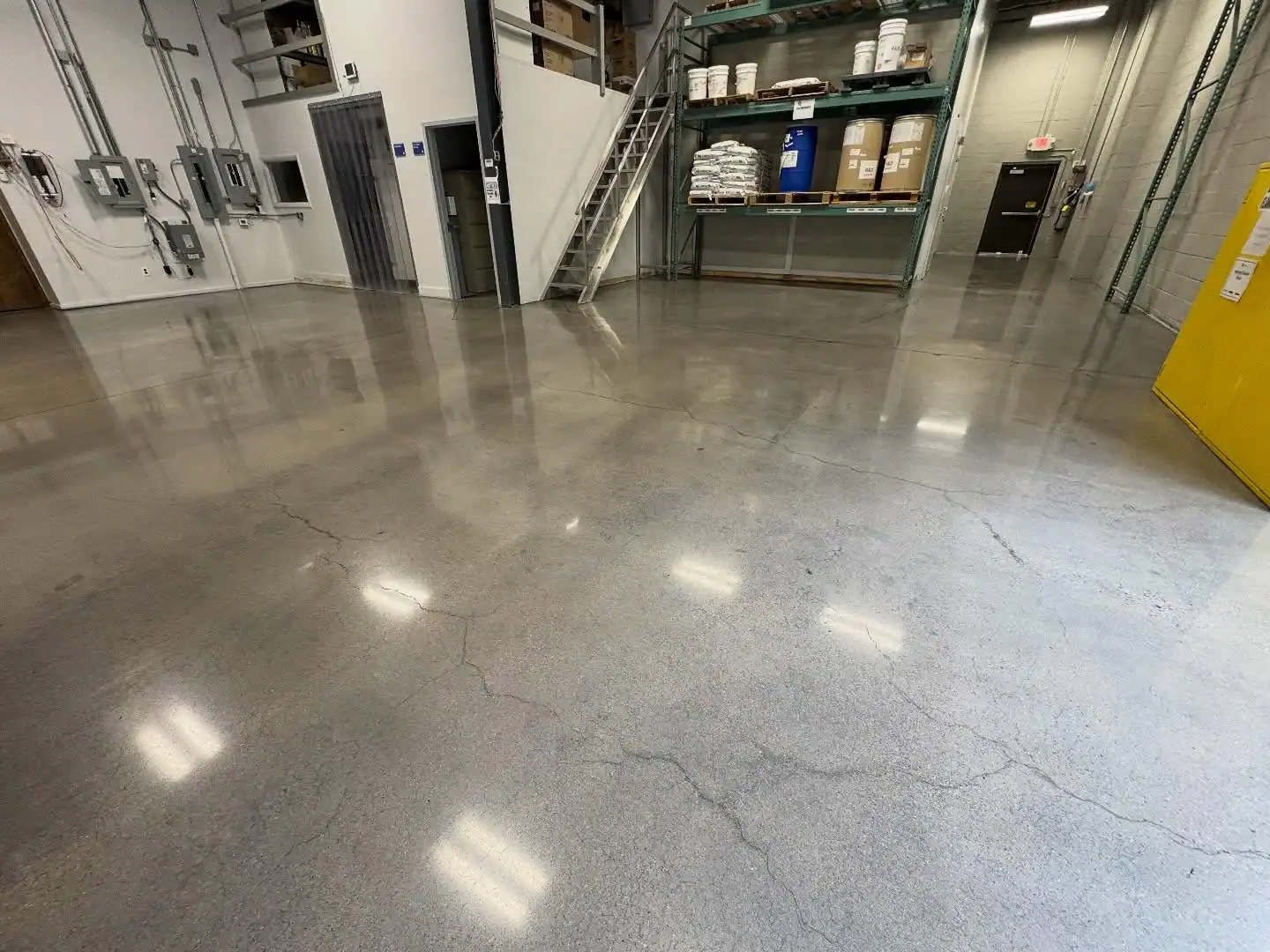
Industrial concrete floors take a level of punishment that most commercial spaces never see. We’re talking forklift traffic, constant heavy loads, chemical spills, thermal shock from steam cleaning or extreme temperature swings, and operations that run around the clock without much downtime for maintenance.
A standard commercial coating — the kind appropriate for a retail showroom or an office lobby — isn’t engineered for that. The chemistry is different, the film thickness is different, and the preparation requirements are more demanding. Installing a commercial-grade system in a true industrial environment is like putting passenger car tires on a delivery truck. It might look fine at first. It won’t hold up.
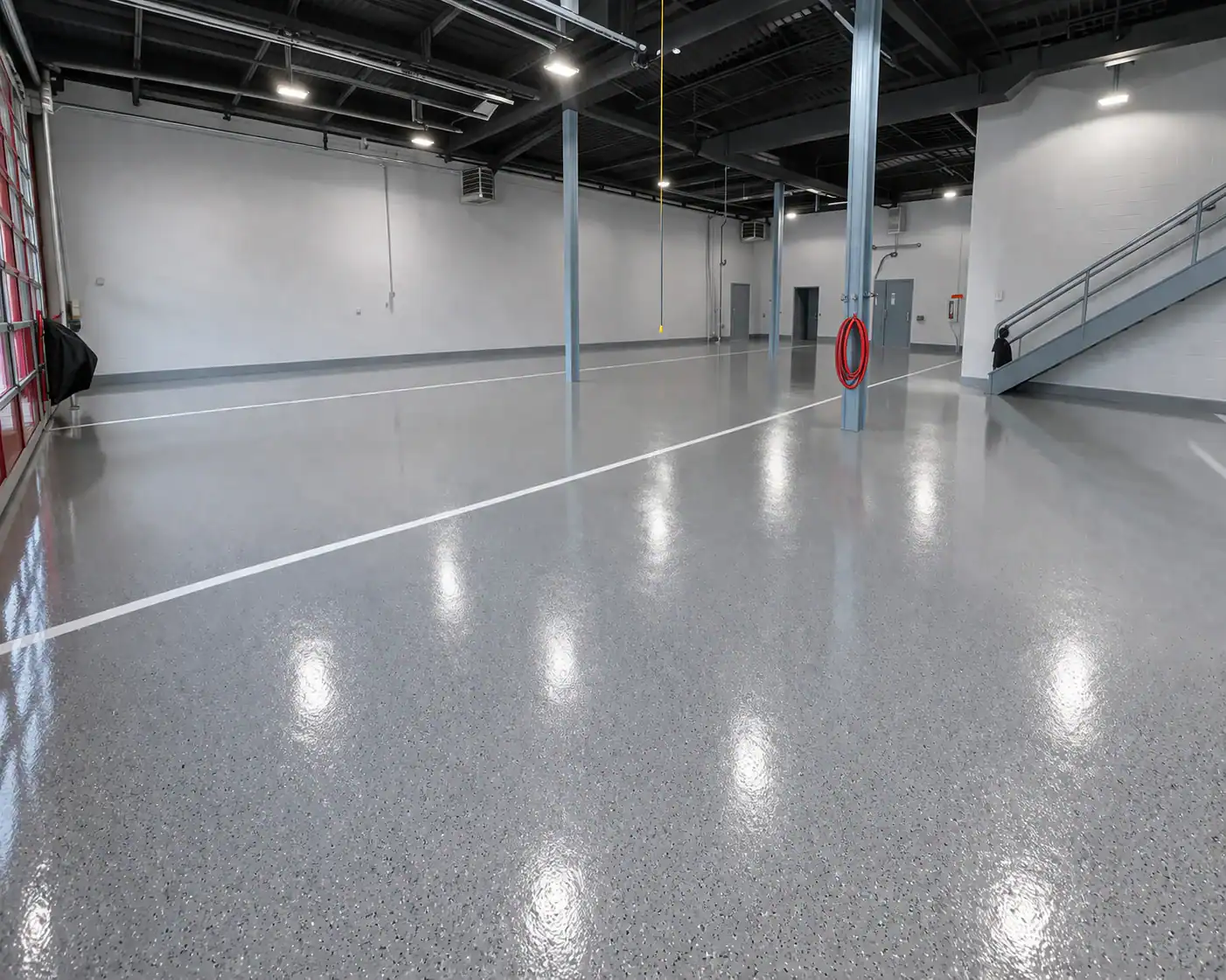
When we talk about industrial concrete coatings, we’re talking about systems with significantly more material build than what you’d find in a typical commercial application. Residential and light commercial epoxy products — the kind sold at big-box stores — cure to somewhere between 3 and 8 mils of dry film thickness. Industrial-grade systems run from 10 mils on the low end to well over 100 mils for the most demanding environments. That difference in build is what allows an industrial floor to absorb repeated forklift impact, resist chemical penetration, and hold up under constant load without cracking or delaminating.
The specific system depends on the specific environment. For facilities dealing with thermal shock — commercial kitchens, food processing areas, or anywhere that gets hit with steam cleaning or dramatic temperature changes — cementitious urethane is usually the right answer. It flexes slightly with the slab, which means it doesn’t crack when temperatures swing hard. Most epoxy contractors aren’t trained to install it correctly, which is part of why it’s not commonly offered.
For facilities where UV exposure is a factor, or where you need the floor back in service as fast as possible, polyaspartic topcoats are the right move. Polyaspartic cures faster than epoxy and holds its color under UV light — standard epoxy yellows over time when exposed to sunlight. The best commercial and industrial systems often combine both: an epoxy base for adhesion and chemical resistance, with a polyaspartic topcoat for durability and UV stability. That’s a specialized installation, and it requires factory training to execute properly.
What all of these systems have in common is that they start with the concrete, not the coating. The product is only as good as the surface it’s bonded to. Diamond grinding — not acid washing, not a quick sweep — is what creates the surface profile that allows industrial coatings to actually adhere. Skip that step and it doesn’t matter what product you use. The floor will fail, and it’ll fail faster than you’d expect.
Nassau County sits between the Atlantic Ocean to the south and the Long Island Sound to the north. That geography creates a persistent moisture environment that most inland markets don’t deal with. Ground moisture vapor moves up through concrete slabs constantly — and in Nassau County, those moisture levels are elevated compared to areas further inland. If a contractor installs a coating without testing for moisture first, that vapor will eventually push up from below and lift the coating off the slab. It doesn’t matter how good the product is. The bond fails.
This is why moisture testing isn’t optional on any job we do in Nassau County. It’s the first real conversation we have with every client before any coating is applied. We measure what’s actually in the slab, and we specify a system that accounts for it. That might mean a moisture-tolerant primer, a specific base coat formulation, or a different topcoat than we’d use in a drier environment. The point is that we’re not guessing.
Long Island winters add another layer. Freeze-thaw cycles stress concrete slabs in ways that Southern or Midwestern markets simply don’t experience. Water gets into micro-cracks, freezes, expands, and widens those cracks. If the coating isn’t properly bonded — or if the surface wasn’t prepared correctly — those movements will cause delamination over time. Add road salt tracked in from Nassau County’s heavily treated roads, and you have a chemically aggressive environment on top of a physically demanding one. Industrial facilities here need systems that were specified with all of that in mind, not systems that were spec’d for a generic warehouse somewhere in the Sun Belt.
Want live answers?
Connect with an Advanced Epoxy Flooring expert for fast, friendly support.
Commercial floor coatings cover a wide range of environments — retail spaces, office buildings, showrooms, commercial kitchens, healthcare facilities, and automotive service centers. What makes a coating the right choice for a commercial space isn’t just durability. It’s matching the specific demands of that environment to a system that’s actually built for them.
A showroom floor in Garden City has different requirements than a commercial kitchen in Hempstead or a medical office near Nassau University Medical Center in East Meadow. Getting that match right is what determines whether your floor looks good and functions properly five years from now — or whether you’re calling someone to figure out why it’s peeling.
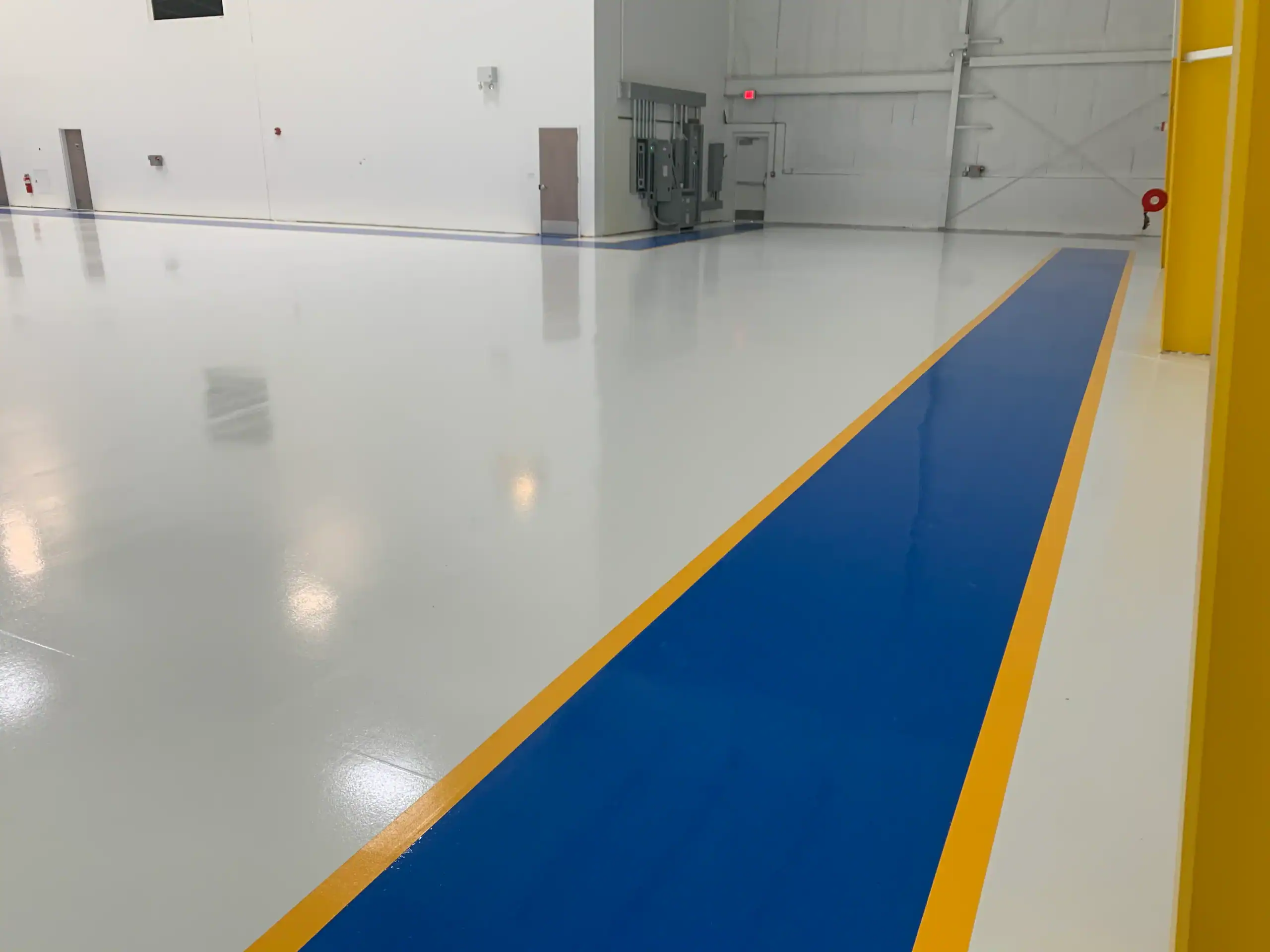
Commercial kitchens are one of the most demanding flooring environments in any category — commercial or industrial. The combination of constant moisture, grease, cleaning chemicals, thermal shock from steam, and the need to meet Nassau County health code requirements puts real pressure on whatever system you install. The county requires kitchen floors to be smooth, non-absorbent, easily cleanable, and durable. Bare concrete fails every one of those criteria. So does a standard epoxy system that wasn’t designed for the environment.
For commercial kitchens, the system we typically specify is a USDA-approved, food-grade epoxy with cementitious urethane in areas that see the most thermal stress — directly around cooking equipment, dishwashing stations, and anywhere that gets hit with steam or boiling water. Cementitious urethane handles temperature swings that would cause standard epoxy to crack or lift. It also bonds to damp concrete, which matters in a kitchen environment where the slab is almost never completely dry.
The cove base is part of this too. A properly installed coved base — where the floor coating runs up the wall a few inches in a curved transition — eliminates the seam between floor and wall where bacteria and moisture accumulate. It’s a detail that matters for health code compliance and for long-term hygiene. Nassau County health inspectors look for it. Kitchens that skip it tend to have problems at inspection.
We’ve been installing commercial kitchen floors across Long Island for over 30 years. That experience reflects the level of specification and execution that commercial kitchen flooring actually requires when the stakes are high. Every kitchen we work on in Nassau County gets that same level of attention to the details that determine whether the floor holds up.
The right coating depends entirely on what the space does. That sounds obvious, but it’s the step that gets skipped when a contractor shows up with one system they install everywhere.
For healthcare facilities — medical offices, surgical suites, labs, outpatient centers — the floor needs antimicrobial properties, seamless construction to prevent bacterial harborage, and the ability to withstand aggressive cleaning chemicals used in clinical environments. Nassau County’s healthcare sector is the largest single employment category in the county, with over 125,000 people working in health care and social assistance. The East Meadow medical corridor alone, anchored by Nassau University Medical Center, represents a significant concentration of facilities that need floors specified to clinical standards. Every installer we send into a healthcare environment is OSHA 40 certified. That’s not a marketing line — it’s a specific credential required for work in environments with hazardous materials, and it reflects the level of training the work actually demands.
For automotive service centers and repair shops across Nassau County, the primary requirements are chemical resistance and impact tolerance. Motor oil, hydraulic fluid, brake fluid, and road salt all degrade uncoated concrete and poorly specified epoxy systems quickly. A properly specified 100% solids epoxy with a chemical-resistant topcoat handles all of it without staining, softening, or breaking down.
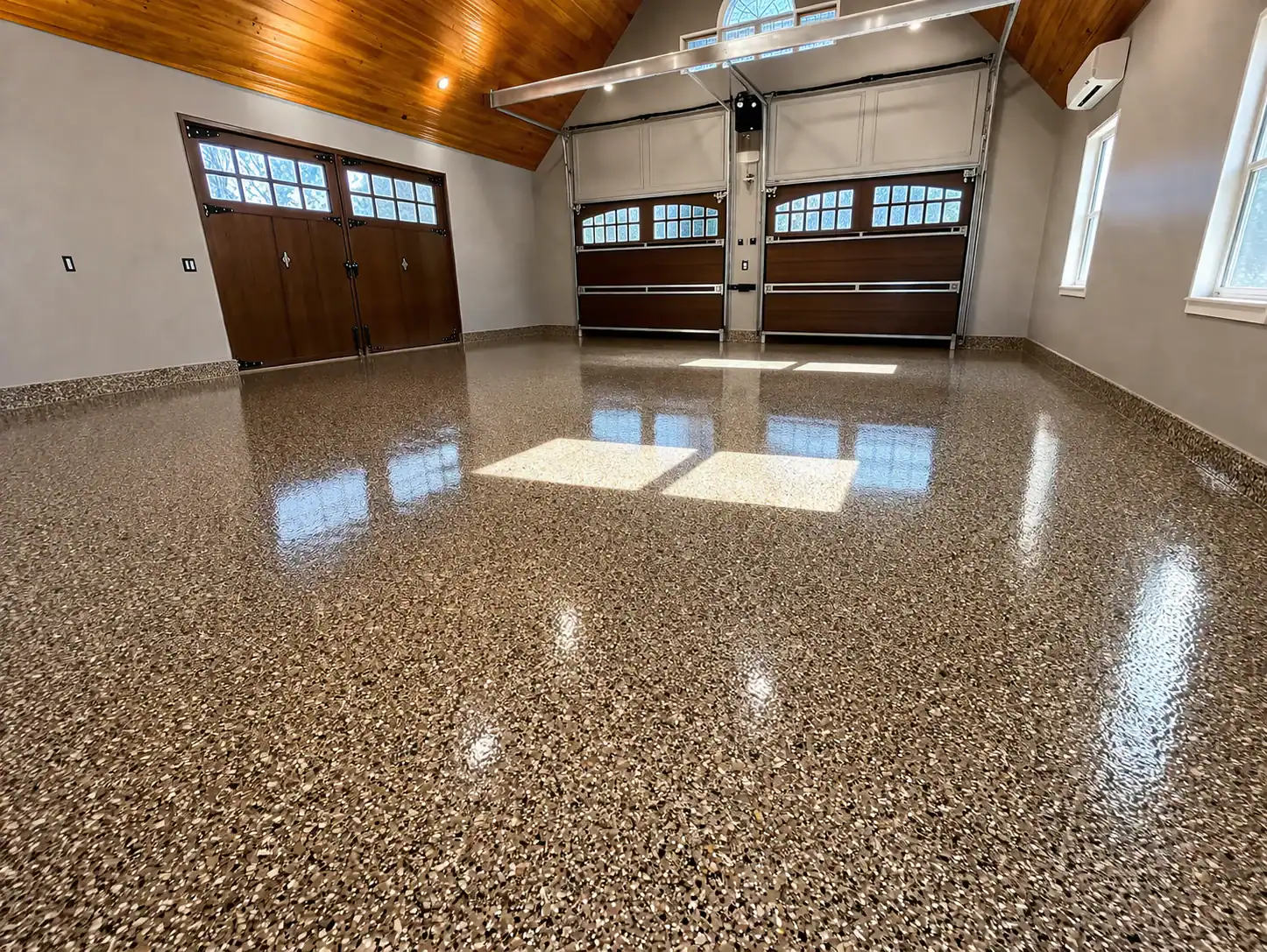
Retail and office environments have different priorities. Here, aesthetics matter alongside performance. Decorative flake broadcast systems with a polyaspartic topcoat give you a floor that looks sharp, holds up to foot traffic, and is easy to maintain — without the clinical feel of a plain gray epoxy. The polyaspartic topcoat keeps the color consistent over time, even in spaces with natural light exposure. For a showroom in Great Neck or a fitness studio in Massapequa, that matters.
The common thread across all of these is that none of them benefit from a one-size-fits-all approach. The facility type, the traffic load, the chemical exposure, the moisture conditions in the slab, and the regulatory requirements all factor into what system actually makes sense. That’s the conversation we have with every client before we recommend anything.
The difference between commercial and industrial floor coatings isn’t just a technical distinction — it’s the difference between a floor that lasts 15 to 20 years and one that needs to be redone in three. The right system, properly prepared and correctly installed, holds up to whatever your facility throws at it. The wrong one fails, and the cost of fixing a failed coating is always higher than the cost of doing it right the first time.
If you’re in Nassau County and trying to figure out what your facility actually needs, the answer starts with an honest assessment of your environment — not a sales pitch for whatever a contractor happens to install. That means moisture testing, surface evaluation, and a real conversation about your traffic, your chemicals, and your timeline.
We’ve been doing exactly that on Long Island for over 30 years. If you want to talk through what makes sense for your space, reach out and we’ll give you a straight answer.
Summary:
Article details:
Share: