A practical look at Nassau County's industrial equipment supplier landscape — who's out there, what they carry, and how your facility fits in.
If you manage a facility in Nassau County, you already know the drill. You need reliable suppliers, you need them local, and you need them to actually understand what your operation requires — not just hand you a catalog and disappear. Finding industrial equipment suppliers who know the Long Island market, stock what you need, and show up consistently is harder than it should be. This guide lays out who’s operating in the Nassau County area, what they specialize in, and what to consider when you’re building or tightening up your vendor list.
Nassau County has a surprisingly active industrial supply ecosystem — especially when you factor in the warehousing corridors along the I-495 and Southern State Parkway, the healthcare facilities spread across the county, and the food service operations running out of communities like Baldwin and Freeport. The suppliers operating in this market serve a range of facility types and understand what Nassau County operations actually need.
Nassau Industrial Supply out of Elmont has been in the rigging and wholesale industrial supply business since 1975. That kind of longevity in a competitive market says something. They cover a broad range of products — abrasives, drill bits, saw blades, cutting tools — the kind of everyday consumables that facilities burn through fast. Global Industrial, headquartered in Port Washington, is one of the larger players in the region, founded in 1949 with a catalog that spans over 1.7 million products across 21 categories including HVAC, building supplies, and machining equipment.
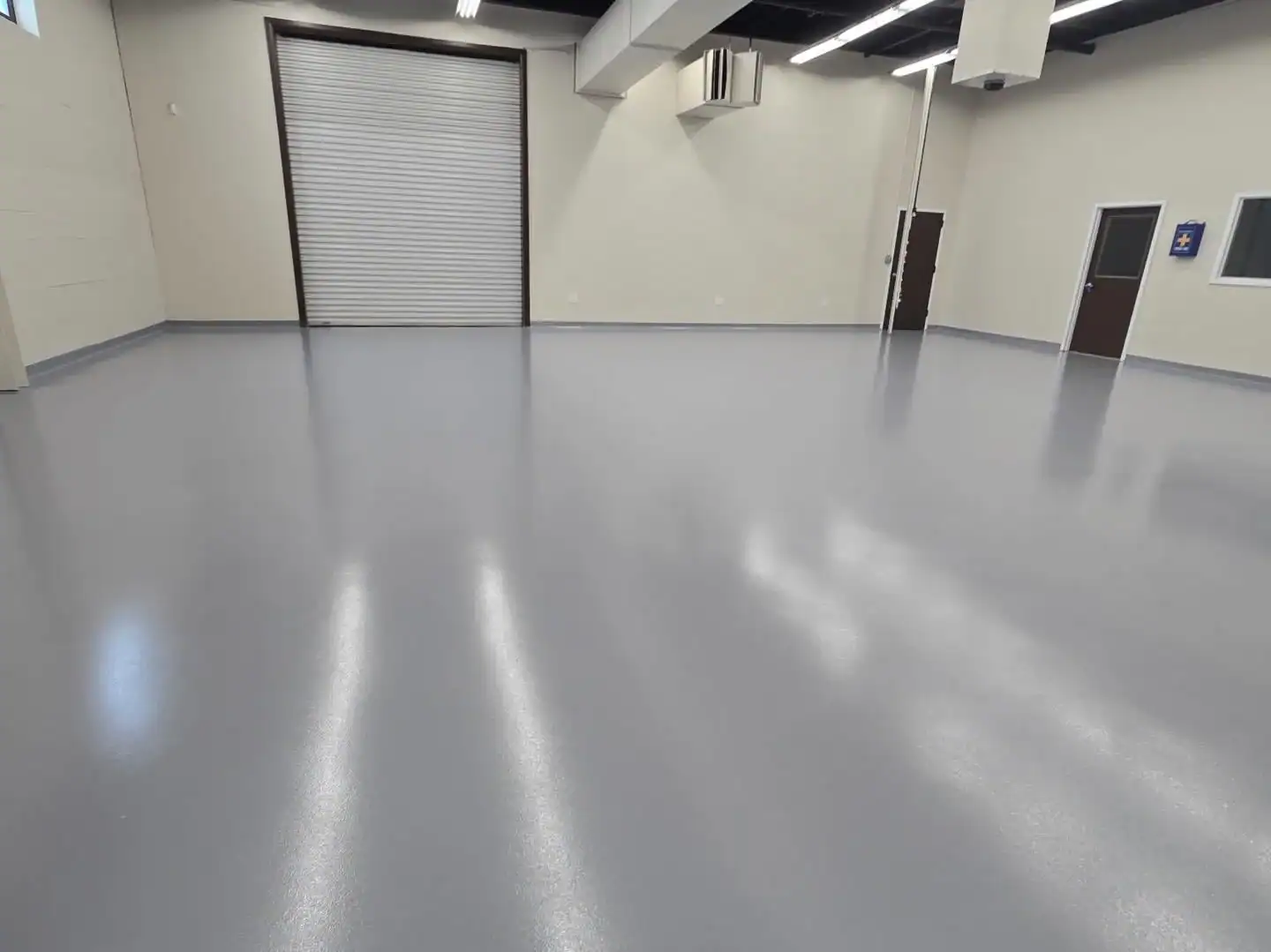
Safety and compliance aren’t optional in Nassau County’s industrial and commercial facilities. OSHA requirements, local health department inspections, and the realities of running a busy warehouse or kitchen mean your PPE and safety equipment suppliers need to be on point — not just stocked, but knowledgeable about what your specific environment actually requires.
TECHACS Safety Solutions explicitly serves Nassau and Suffolk Counties and carries a comprehensive range of OSHA-compliant equipment — hard hats, safety glasses, gloves, boots, respiratory protection, fall protection systems, and high-visibility apparel. They’re not a generalist warehouse with a safety section; safety is the focus. That distinction matters when you’re trying to stay ahead of an inspection or outfit a crew correctly the first time.
Industrial Strength Industries brings a different angle to the market. They’re a WBENC-certified, woman-owned small business and a certified NY State MWBE, which makes them a strong fit for facilities that work with federal agencies, NY State agencies, or the MTA. If your procurement process involves government contracts or supplier diversity requirements, that certification matters. They carry industrial and safety supplies across a wide range of categories and understand the compliance side of the equation.
For industrial cleaning equipment specifically, SafeWash Tech operates out of Farmingdale and serves Nassau County facilities. And if you’re looking for more general maintenance supplies, Nassau Maintenance Supply is located at 9248 246th Street in Floral Park — reachable at (516) 616-6251 — and serves the county’s day-to-day facility maintenance needs.
What separates the better facility equipment vendors from the average ones isn’t just what they stock. It’s whether they can advise you, respond quickly, and actually understand what your facility type demands. A healthcare facility in Garden City has different requirements than a distribution center in Melville. The suppliers worth building a relationship with understand that distinction before they start talking product.
The cheapest option rarely stays cheap for long. That’s true of industrial equipment suppliers the same way it’s true of contractors. A supplier who doesn’t understand your regulatory environment, can’t advise you on product selection, or disappears after the sale will cost you more in the long run — through compliance issues, product failures, and wasted time sourcing replacements.
There are a few things worth evaluating before you commit to a supplier relationship. First, do they actually know your industry? A supplier who serves commercial kitchens, warehouses, and healthcare facilities all day long will understand the specific requirements of each environment. One who treats every facility the same is going to give you generic answers to specific problems. Second, what does their after-sale support look like? Can you reach someone when something goes wrong, or are you on your own? Third — and this matters more in Nassau County than people might expect — do they understand the local environment?
Nassau County sits between the Atlantic Ocean and Long Island Sound. That coastal geography creates persistent humidity that affects equipment, materials, and facility surfaces in ways that don’t show up in a product spec sheet. Suppliers and contractors who have operated on Long Island for years know this. Those who don’t may underestimate it. The same humidity that causes problems for flooring adhesion affects how equipment and materials perform over time in these facilities. It’s worth asking your supplier whether they factor that into their recommendations.
The producers of industrial materials — steel, copper, polymer resins — saw price index increases of 4.2% in 2024. That’s putting real pressure on facility maintenance budgets across Nassau County. All the more reason to invest in products and systems that hold up, rather than cycling through cheaper options that fail and need replacement. The total cost of ownership conversation is one that good suppliers are willing to have with you. If yours isn’t, that tells you something.
Want live answers?
Connect with an Advanced Epoxy Flooring expert for fast, friendly support.
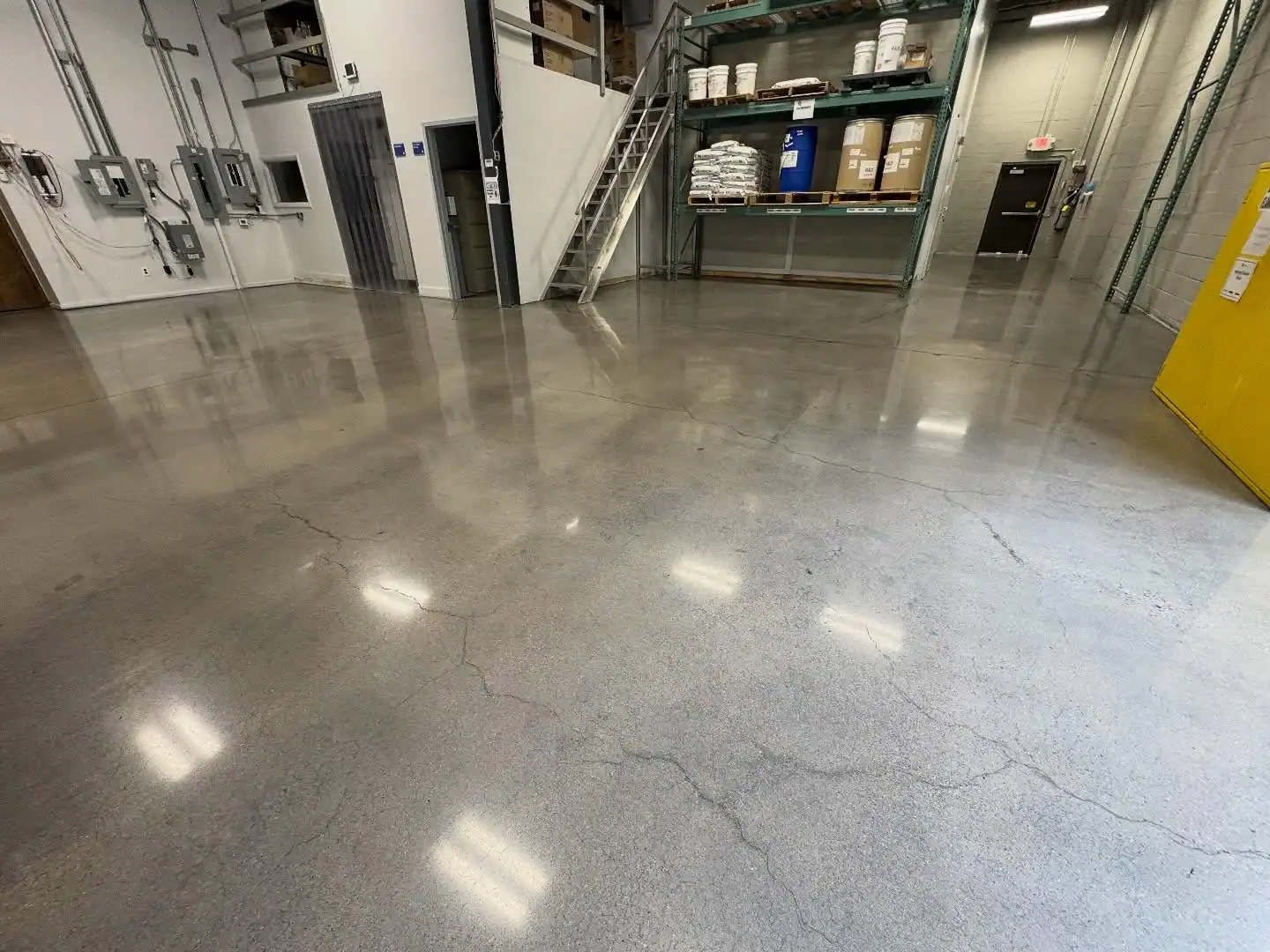
Here’s something that doesn’t come up often enough in facility planning conversations: your floor is the foundation that every piece of equipment, every safety system, and every daily operation runs on. Industrial equipment suppliers can outfit your facility with the best tools and machinery available — but if the floor underneath is cracked, dusty, chemically porous, or failing, you’re fighting an uphill battle with maintenance, safety, and cleanliness from day one.
This isn’t a niche concern. OSHA has specific requirements for flooring in warehouse and manufacturing environments. Nassau County’s health department has standards for commercial kitchen floors. Healthcare facilities need surfaces that can handle disinfectant protocols without degrading. The floor is part of the compliance picture, not separate from it.
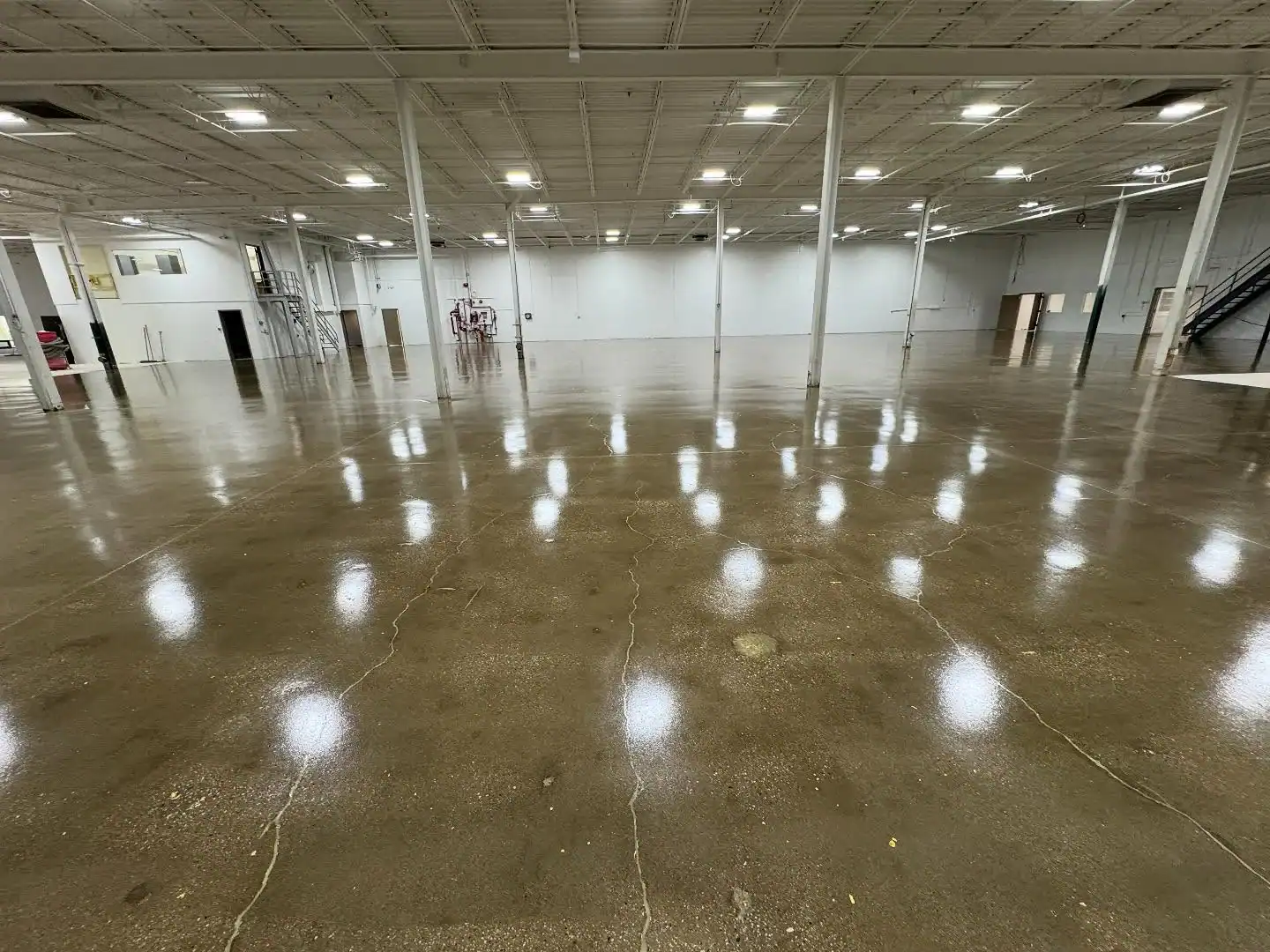
Long Island’s geography is beautiful and relentless. The moisture that rolls in off the Atlantic to the south and Long Island Sound to the north doesn’t stop at your facility’s front door. It works its way into concrete slabs, creates vapor pressure beneath surface coatings, and is the single most common reason epoxy floors fail prematurely in this region.
Most contractors don’t test for moisture before they install. They show up, apply the coating, and move on. When the floor starts peeling or bubbling six months later, they’re long gone. Moisture assessment isn’t a bonus step — it’s the step that determines whether the floor holds for two years or twenty. The concrete beneath a Nassau County warehouse that’s been absorbing coastal humidity for decades behaves differently than a slab in a dry inland market, and the installation process needs to reflect that.
This is especially relevant for facilities in Farmingdale, Melville, and the South Shore communities where warehousing and food service operations are concentrated. These areas see real humidity variation between seasons, and the spring and early fall windows — when conditions are most stable — tend to be the best time to schedule major flooring work.
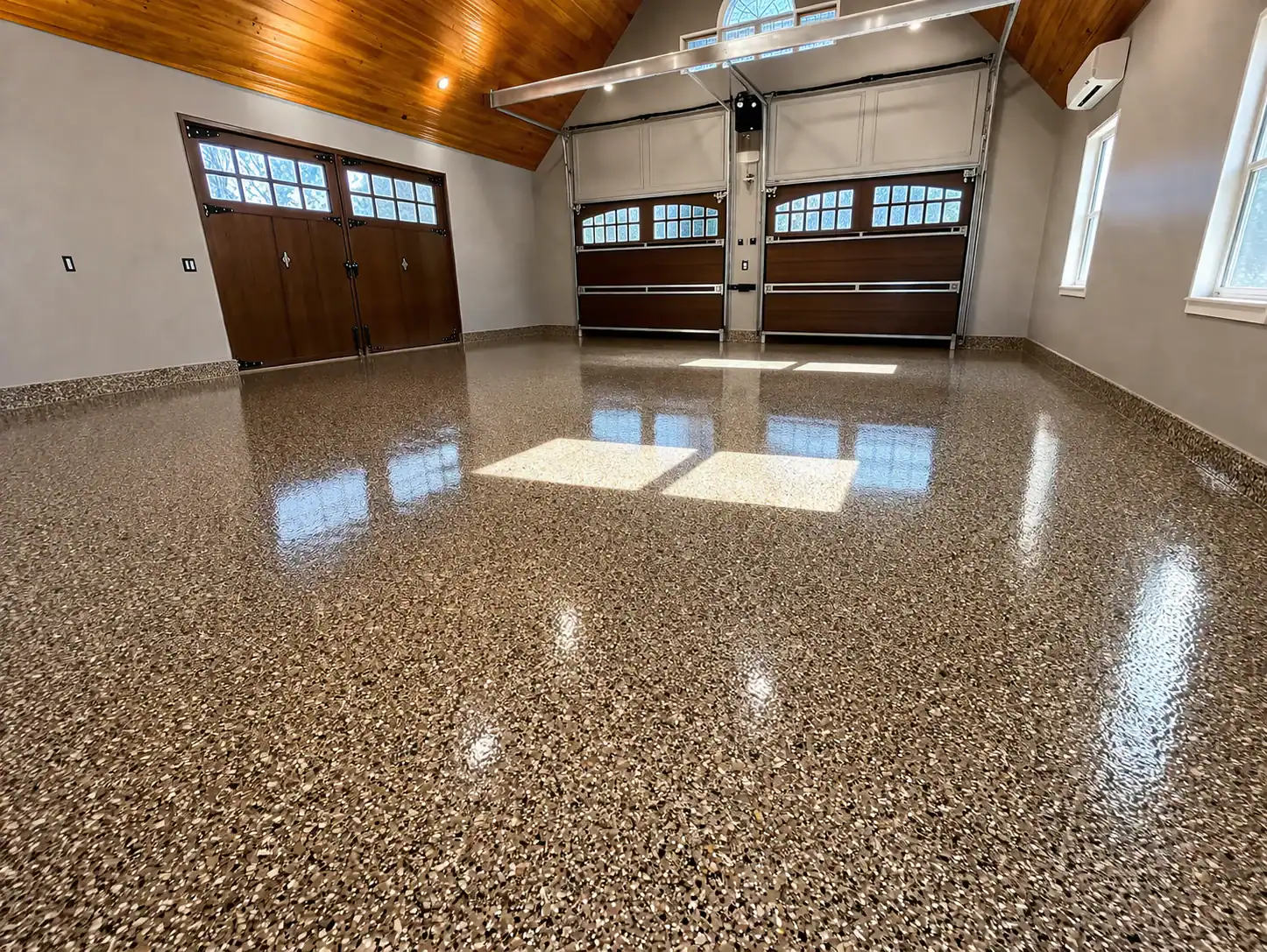
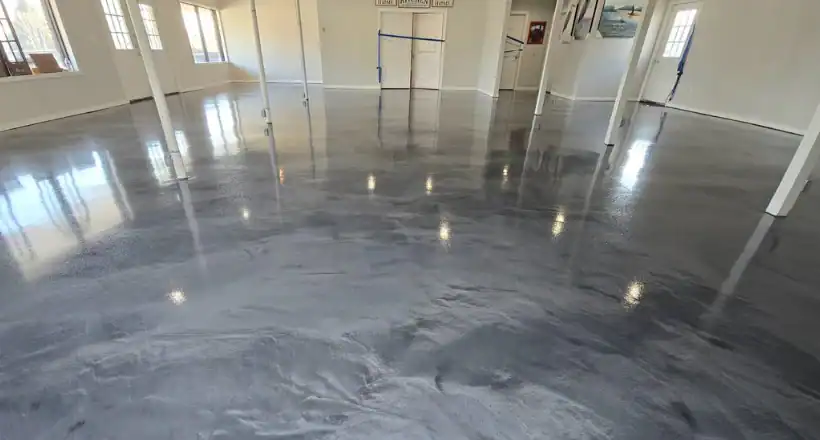
The right approach involves diamond grinding the concrete surface to create proper adhesion, testing moisture levels before any coating goes down, selecting a primer and coating system matched to the actual conditions of that specific slab, and applying each layer with adequate cure time between coats. Skipping any of those steps is how you end up back at square one in a few years. Done correctly, a commercial-grade epoxy system in a Nassau County facility can last 10 to 20 years or more — which, when you spread that cost across the lifespan of the floor, is a very different number than patching and recoating every few years.
This question comes up a lot, and it’s worth answering directly. The epoxy kits sold at home improvement stores are consumer-grade products designed for residential garages. They’re not engineered for forklift traffic, battery charging station chemical exposure, industrial cleaning chemicals, or the kind of thermal shock a commercial kitchen floor experiences every single day. Applying a consumer product in a commercial environment isn’t a cost-saving move — it’s a setup for an early failure.
Commercial-grade industrial epoxy systems are a different category entirely. The thickness is different. The adhesion chemistry is different. The topcoat options — including polyaspartic coatings and cementitious urethanes that most contractors aren’t even trained to install — are designed for environments that see real abuse. A cementitious urethane, for example, is the right choice for commercial kitchens because it handles thermal shock and caustic cleaners in a way that standard epoxy simply doesn’t.
For healthcare facilities, the antimicrobial additives integrated into the resin aren’t a marketing feature — they’re a functional requirement in operating rooms and patient corridors where pathogen control is non-negotiable. For Nassau County warehouses running 24/7 operations, the floor needs to handle constant forklift traffic, resist chemical spills from equipment maintenance, and still look clean enough to pass a walk-through inspection.
The installation timeline matters too. Commercial facilities can’t afford a weeks-long shutdown. A properly managed installation — surface prep, moisture testing, multi-layer application with appropriate cure windows — can typically be completed in a matter of days, with floors ready for traffic within 24 to 72 hours. That’s not a rushed job. That’s what a well-run installation looks like when the process is dialed in.
Nassau County’s industrial and commercial facilities operate in a specific environment — coastal humidity, dense logistics corridors, strict regulatory oversight, and a market where reliability is genuinely hard to find. The suppliers listed here have real roots in the county and serve a range of facility types. Building a vendor list that actually reflects your operation’s needs takes some legwork, but it pays off in fewer surprises and lower long-term costs.
The floor is part of that equation. Every piece of equipment your suppliers provide, every safety system your team depends on, and every operational process your facility runs — it all happens on the floor. Getting it right the first time, with a system matched to your actual environment, is one of the more durable investments a Nassau County facility manager can make.
We’ve been working in Nassau and Suffolk Counties for over 35 years and know this market well. We understand the humidity challenges, the regulatory landscape, and what it takes to keep a facility running smoothly. Reach out to start a conversation about what your facility actually needs.
Summary:
Article details:
Share: